


Hosanna: A Prayer Before It Is Praise

This morning I led the Palm Sunday service at my link church and I find myself wondering whether I tried to do too much.
Going in I wanted to help people see that Palm Sunday is not an isolated moment, but the beginning of a week that leads inexorably toward the cross. I wanted to draw out the tension, to show how this moment fits within the wider story of Holy Week.
My first instinct had been to just focus on the reading from Matthew 21:1-11, possibly including Psalm 118 as well. And in retrospect, I should have stuck to that, rather than trying to move us into Holy Week itself.
Palm Sunday has a particular kind of power when it is allowed to stand on its own. The crowd gathers. The branches are waved. The cry goes up: Hosanna. And beneath it all, there is a question: who is this King?
It is a moment full of ambiguity.
The people hope, but they do not yet understand. They cry out for salvation, but the shape of that salvation remains unclear.
And perhaps that is precisely where we are meant to begin.
Part of that realisation came from something I hadn't expected. Almost everyone understood “Hosanna” as a word of welcome, a shout of praise, something like “hallelujah.”
But that isn’t what the word means.
“Hosanna” is a plea. It means: save us, we pray.
And that changes how we hear the whole scene.
The crowd is not simply welcoming Jesus. They are crying out to him.
Jesus’ entry into Jerusalem was not a quiet or neutral moment. It was instead a very deliberate, political act, one that stood in stark contrast to the displays of imperial power entering the city from the other side.
Where empire came with spectacle, control, and the threat of force, Jesus came not on a war horse, but on a donkey.
For those watching, this was significant. It echoed the prophetic words of Zechariah 9:9:
“See, your king comes to you… humble and riding on a donkey.”
In the ancient world, rulers rode horses when they came in conquest. A donkey signaled something else: peace, humility, a refusal to rule by force. This choice completely redefines what Kingship means.
And so Jesus enters as a different kind of king altogether.
Not surrounded by soldiers, but by followers waving branches, symbols drawn from the songs of their faith, not spears.
It borders on parody. A kind of counter-procession that exposes the pretensions of power by refusing to play the same game.
And the people cry out: Hosanna. Save us.
They recognise that something is wrong. They know they need deliverance. But perhaps they do not yet understand what that salvation will look like.
Because the salvation Jesus offers does not come through force and does not try to seize control. It comes through something far more difficult to recognise: through self-giving, non-coercive love.
And that is where the tension of Holy Week begins.
The crowd cries out for salvation, but the form that salvation takes challenges everything they had come to expect.
And perhaps that is still true for us.
There is a temptation, especially when we have a framework that makes sense of the whole, to explain it, to connect the dots, to make sure everything is clear.
But clarity can sometimes come at the cost of depth.
By explaining everything too soon, we risk taking away the space in which people might encounter the story for themselves.
Palm Sunday is not yet Good Friday.It is not yet Easter.
It is a moment of expectation, misunderstanding, and hope, a moment where the cry of “Hosanna” is still a plea, not yet a fulfilled answer.
The crowd did not understand what was coming. And perhaps we are not always meant to either.
Palm Sunday invites us not to step outside the story and interpret it, but to stand within it, to join the crowd, to raise our voices, and to pray:
Hosanna... Save us, we pray.
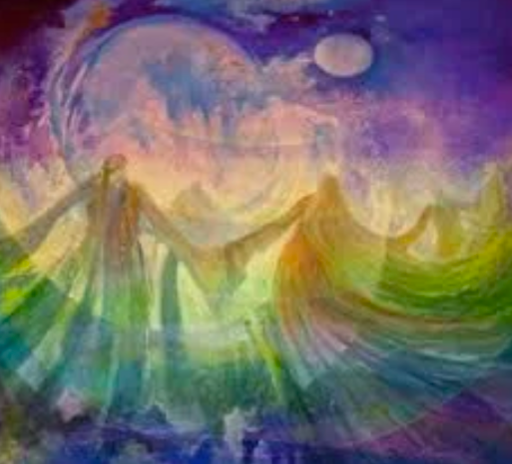
This morning, as I'm sure many of us did, we sang Hosanna. As we sang, I was struck by the dissonance between the tone of the chorus and the meaning of the words. Here is my attempt to sit with that tension between prayer and praise, despair and hope.


Comments